When the house feels overwhelming, clean in this order: trash first, then dishes, then laundry, then clear the surfaces you use every day, and vacuum or sweep last. Start with one room, preferably the kitchen or the room where you spend the most time, and finish it before moving on. Trash and dishes come first because they are the biggest sources of smell and visual chaos, and removing them gives you the quickest sense of progress.
Overwhelm is usually less about how dirty the house is and more about not knowing where to begin. The plan below gives you a triage order, a way to work through one room, time-boxed sessions, and a short list of things to ignore until later, so you can make visible progress without burning out.
Why the order matters
When everything looks like a problem, the instinct is to pick something at random or start in the room that bothers you most. This often leads to half-finished tasks everywhere. Triage works better because it ranks tasks by how much they improve the space per minute spent.
Ask of each task:
- Does it affect health or smell? Rotting food, trash, dirty dishes, and a dirty toilet come first.
- Does it block function? A sink full of dishes means you cannot cook. A bed covered in clothes means you cannot sleep. Clear what stops you using the room.
- Is it highly visible? Flat surfaces and floors in main areas change how a room reads at a glance.
- Is it quick? Tasks under five minutes build momentum.
Detail work such as baseboards, closets, and drawers ranks last, because it has a low visible payoff for the time it takes. Deeper jobs have a place, but later. See what to focus on when deep cleaning a home for when you get there.
The triage order
Work through these steps in sequence. You can stop after any step and the home will be better than when you started.
- Open windows and put on music or a podcast. Fresh air helps odor, and a distraction makes the work feel lighter.
- Trash pass. Carry a trash bag through the house and collect all obvious garbage: wrappers, packaging, food containers, junk mail, and broken items. Tie it off and take it out. This alone often clears a surprising amount of space.
- Dishes and food. Gather cups, plates, and bowls from every room and bring them to the kitchen. Run the dishwasher or wash by hand. Put away leftovers or discard anything spoiled.
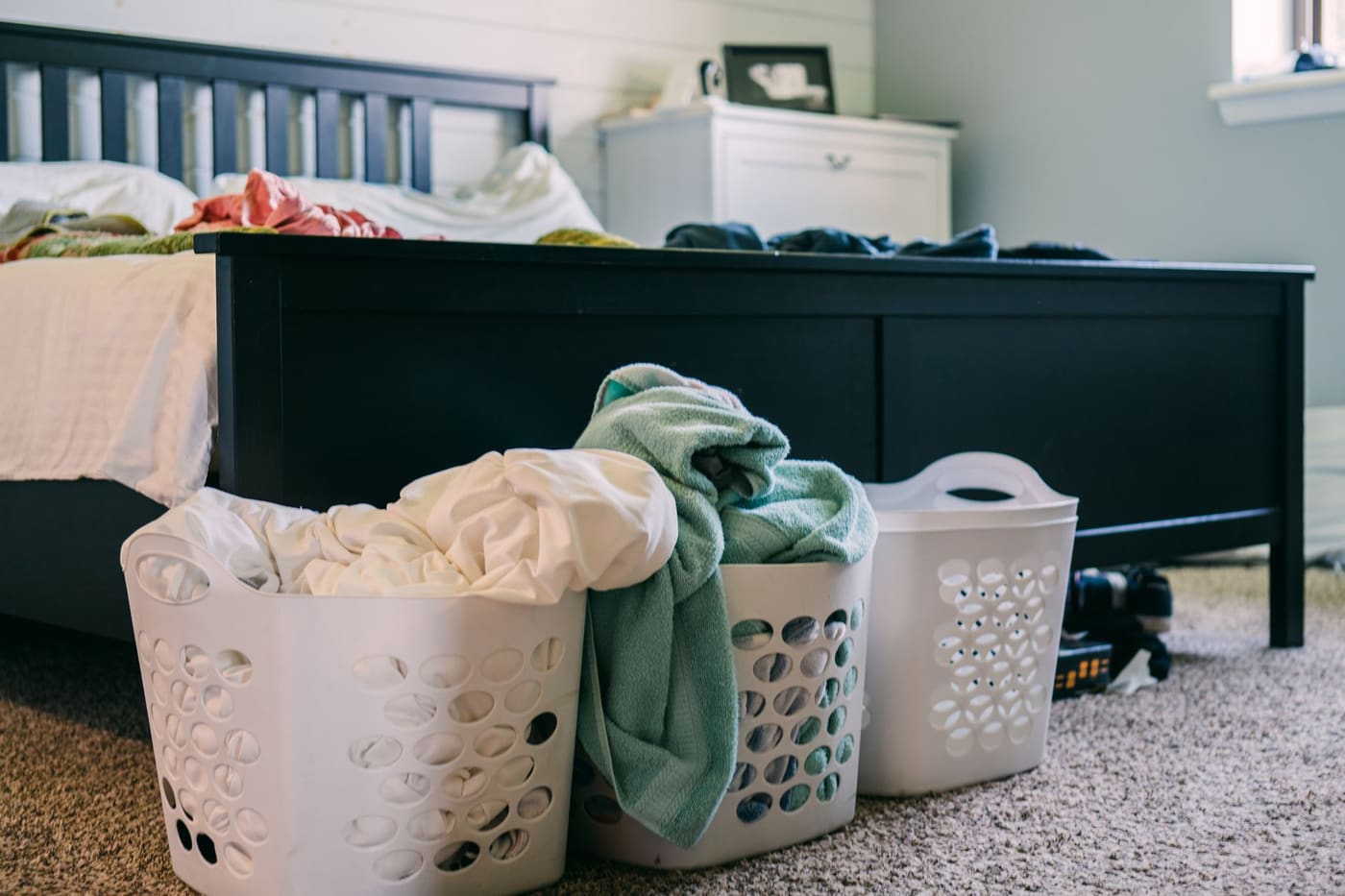
- Laundry. Collect clothes from floors and chairs. Put dirty items in a hamper or basket, start a load, and move clean items to a basket to put away later.
- Clear the main surfaces. Use a basket for items that belong in other rooms. Clear the kitchen counters, the table, and the surface you see first when you walk in.
- Wipe the surfaces. A damp cloth with all-purpose spray over counters, the stovetop, and the table.
- Bathroom essentials. Clean the toilet, sink, and trash. Skip the tub for now.
- Floors. Sweep or vacuum the main walkways, then mop only if there are sticky spots.
In a typical home this might take an hour or two, though a heavily neglected one may need several sessions; treat that as a rough guide, not a standard. The first four steps give most of the relief.
Pick one room and finish it
Spreading effort across every room leaves nothing finished, which feeds the sense of failure. Choose a single room and bring it to a done state. A completed room works as a visual anchor, and you will have a place to sit that feels good.
Which room first? A rough guide:
| If this is true | Start with |
|---|---|
| You cannot cook or eat comfortably | The kitchen |
| You are not sleeping well | The bedroom |
| You are embarrassed about guests seeing it | The entry and living room |
| The bathroom is unusable or smelly | The bathroom |
| You work or study at home | The workspace |
For most people the kitchen is a good first choice, since it contains the largest sources of smell and mess and affects daily routines. If you pick the kitchen, the order in the guide to cleaning a kitchen faster and more effectively helps you avoid redoing steps.
Inside a room, pick a starting point at the door and work clockwise, clearing items, then wiping, then floors. Do not leave until the room passes a simple test: surfaces clear, trash gone, floor visible.
Use short, timed sessions
Large blocks of time are hard to find and hard to face. Break the job into timed sprints.
- 10 minutes: Trash pass and dish gathering.
- 15 minutes: One room’s surfaces cleared and wiped.
- 20 minutes: Laundry sorted and a load started, plus a bathroom reset.
- 25 minutes with a 5-minute break: A longer sprint for floors and the kitchen.
Set a timer and stop when it ends, even if you are midway. Stopping on schedule makes it easier to start the next session, and a visible end reduces dread. If you only have a short window today, the guide to what to clean when you only have 20 minutes lays out what to hit first.
Plan two or three short sessions a day for a few days instead of one heroic day. Pause for food, water, and rest. Wear closed-toe shoes if there are broken items or loose objects on the floor, and use gloves if you are handling spoiled food or mold.
Things to ignore for now
A big part of triage is deciding what not to do yet. Postpone:
- Organizing drawers, closets, and cabinets. Do it once the visible mess is under control.
- Deep cleaning appliances. Ovens, fridges, and washing machines can wait unless there is spoiled food or an odor.
- Window washing, baseboards, and ceiling fans.
- Sorting memorabilia, paper, and sentimental items, which take decisions and emotional energy.
- Buying new storage products. Wait until you know what you are storing.
- Perfection. A room that is clearly better counts as a win.
If there are items you cannot deal with today, put them in a box or laundry basket labeled “to sort,” and set a date to go through it. This holds the clutter in one place and clears the room.
When it is more than cleaning
A home that feels overwhelming can reflect more than a busy week. Low energy, stress, depression, illness, or a life disruption can make routine tasks feel impossible. If that sounds familiar, it is reasonable to shrink the goal to the bare minimum, such as trash, dishes, and a clear path to the bed, and to ask someone for help. Friends, family, or a paid cleaner can help with a one-time reset. If low mood or exhaustion lasts for weeks, talking with a doctor or mental health professional is a good step. If you ever feel unsafe or are thinking about harming yourself, contact your local emergency number or a crisis line in your country right away.
Some situations need specialist help rather than a cleaning plan:
- Extensive mold. The EPA says areas larger than about 10 square feet call for professional advice, as does mold that follows a water leak.
- Pest infestations, such as rodents or cockroaches.
- Biohazards, including sewage backup or heavy contamination.
- Hoarding conditions that block exits, stairs, or kitchens, or that create fire hazards. Specialized cleaners and mental health supports exist for this.
- Structural or electrical damage from water, which licensed professionals should assess.
For ordinary overwhelm, though, a clear order, one room at a time, and short timers are enough.
Keep it from piling up again
Once you have a base reset, protect it with small habits. Do a five-minute evening pickup, empty the dishwasher every morning, and give your most common clutter points a better storage solution. The article on stopping clutter hotspots from coming back explains how to fix repeat piles, and keeping a home cleaner without spending all day cleaning shows a sustainable routine.
Use gentle cleaning products and ventilate as you work. The CDC says never to mix bleach with ammonia or any other cleaner, and gloves are sensible with anything stronger than dish soap.
For a way to choose a routine that fits, see the guide to choosing a cleaning routine.
Where this comes from
The mold threshold comes from the US Environmental Protection Agency’s brief guide to mold, moisture, and your home, and the point about not mixing bleach with other cleaners comes from the Centers for Disease Control and Prevention. The triage order is common cleaning practice rather than research, and this page is not mental health advice. If your mood, energy or safety is a concern, a doctor or mental health professional is the right place to start. Costs and local services change, so check current options near you.