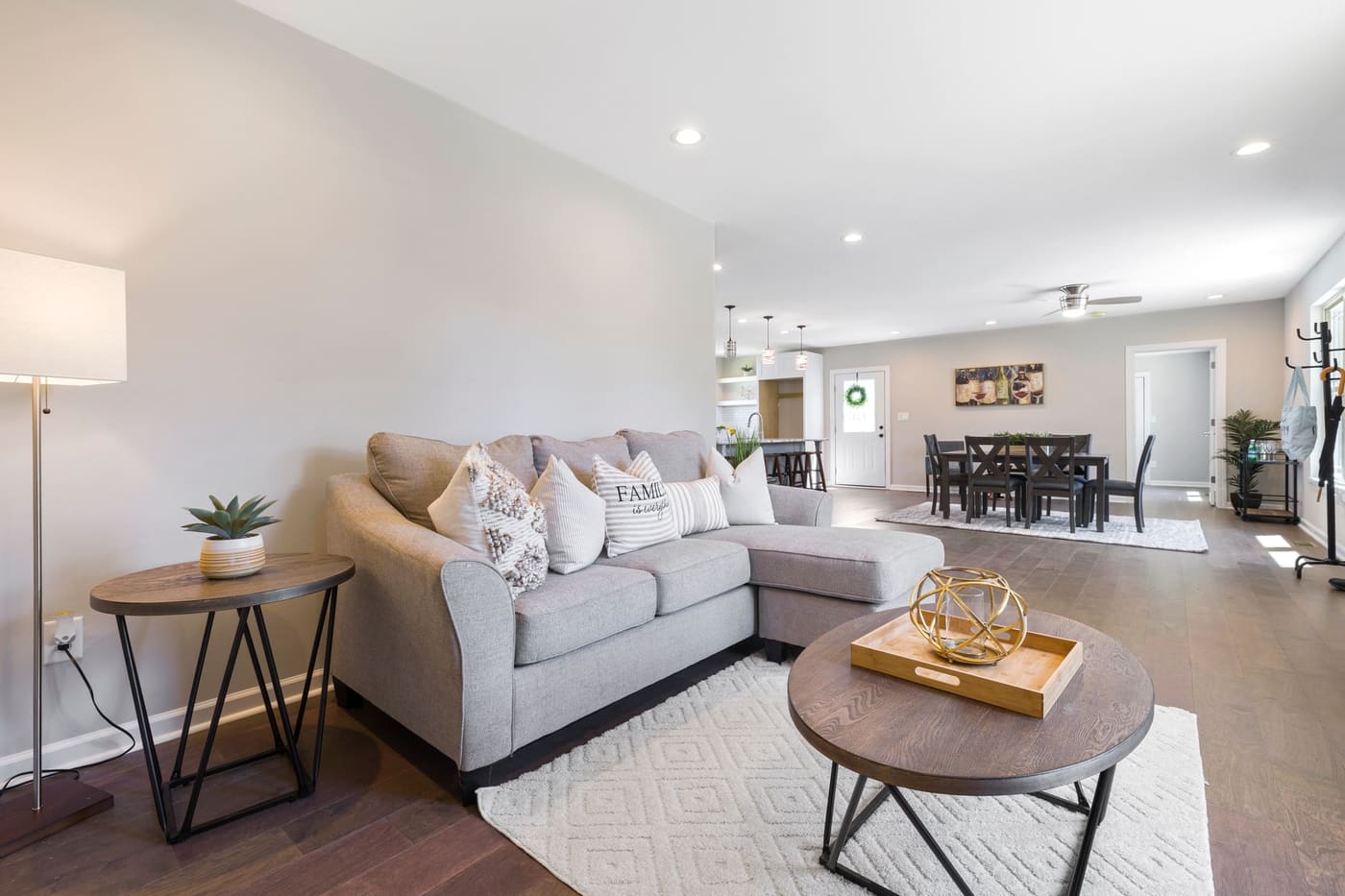
To clean for guests without panic, clean only the path they will walk: the entry, the main living area, the kitchen surfaces they can see, and the bathroom they will use. Clear clutter, wipe the obvious surfaces, freshen the bathroom, take out the trash, and close the doors to everything else. A couple of focused hours on those spaces goes further than a whole-house clean done in a rush.
Visitors tend to notice smell, clutter, the bathroom, and whether there is somewhere to sit and set a drink down. They are far less likely to notice dust on a baseboard or an unorganized junk drawer. The plan below gives you a timeline, a room-by-room order, and a few tricks for the last 30 minutes, when most hosts start to spiral.
Define the guest path before you touch anything
Walk through your home the way a visitor would. Start at the front door, then trace the route to wherever you will sit and eat, then to the bathroom. Write down the rooms on that route. That is your cleaning list.
Typical guest-path spaces:
- Entry: Where coats and shoes go, and whether the floor is clear.
- Main seating area: Couch, coffee table, and the surfaces within reach of a seated person.
- Kitchen or dining area: Counters, sink, and table, if food will be served there.
- Guest bathroom: Sink, toilet, mirror, floor, and towels.
- Overnight guests: Add the guest bedroom and the route to it.
Everything off that route is optional. A messy home office, a laundry room, or a playroom can stay behind a closed door. This is not cheating; it is simply deciding what people will see.
Use a timeline so the last hour is calm
Panic usually comes from starting late with no order. Spread the work across the days before, and the day-of tasks shrink. The times below are rough planning figures, not measured standards.
| When | What to do | Time |
|---|---|---|
| 2 to 3 days before | Declutter the guest path, decide which rooms to close, buy any missing supplies | 30 to 60 min |
| 1 day before | Clean the bathroom, wash towels or bedding, dust and vacuum main areas | 45 to 90 min |
| Morning of | Wipe kitchen, final tidy, take out trash, set out towels | 30 to 45 min |
| 30 minutes before | Light pass: surfaces, floors in the walkway, lighting | 20 to 30 min |
If your guests are arriving in a few hours with no lead time, skip straight to the day-of list and use the framework in the guide on what to clean when you only have 20 minutes.
Declutter first, because clutter hides cleaning
The biggest visual improvement per minute is removing loose items. A cluttered but technically clean room looks messy. A decluttered room with dusty shelves looks fine.
Grab one laundry basket or a large box and sweep through each guest-path room, collecting anything that does not belong: mail, toys, cups, shoes, charger cables, random papers. Do not sort. Put the full basket in a closed room or a bedroom closet and deal with it after the visit.
Then clear horizontal surfaces: kitchen counters, coffee table, dining table, and bathroom counter. Leave only a few intentional items on each, such as a plant or a bowl. Fewer objects make a room look cleaner and make wiping quicker. If your counters or entry become dumping grounds again as soon as guests leave, the advice on stopping clutter hotspots from coming back goes into the cause.
Do the bathroom properly, because guests will use it
The bathroom is the one room almost every guest enters, and it is private, so they may look closely. A good reset usually takes 15 to 25 minutes.
- Declutter: Clear the counter, put personal items such as razors and medications out of sight, and swap in a fresh hand towel.
- Spray and wait: Apply bathroom cleaner to the toilet bowl, sink, and tub or shower edge. Let it sit for the time on the label while you do other tasks.
- Mirror and fixtures: Wipe the mirror with glass cleaner and a microfiber cloth, then polish the faucet dry. Shiny fixtures read as clean.
- Toilet: Scrub the bowl, wipe the seat, lid, and base with a cloth and cleaner or a disinfecting wipe, and put out a fresh roll plus a spare.
- Floor and trash: Sweep or wipe the floor, empty the trash, and put in a new liner.
- Finish: Hang a fresh towel, fill the soap, and leave the fan on or a window open.
Do not mix cleaning products. The CDC says never to mix bleach with ammonia or any other cleaner, and bleach combined with acids, including vinegar and some toilet bowl cleaners, also releases toxic gas. Ventilate and wear gloves for the disinfecting steps. For a bathroom that stays cleaner between visits, see the guide on keeping a bathroom clean with less effort.
Reset the kitchen and living area
For the kitchen, you do not need a deep clean. You need clear counters, an empty sink, wiped surfaces, and no smell.
- Load the dishwasher or hand-wash and put everything away so the sink is empty.
- Wipe counters, the stovetop, and the front of the fridge if it has fingerprints.
- Empty the trash and recycling, and put in fresh liners. Take them outside rather than just tying the bag.
- Wipe the table and any chairs people will use.
- Put out the drinks and food you plan to serve.
In the living room, fluff couch cushions, fold throws, straighten books, and wipe the coffee table.
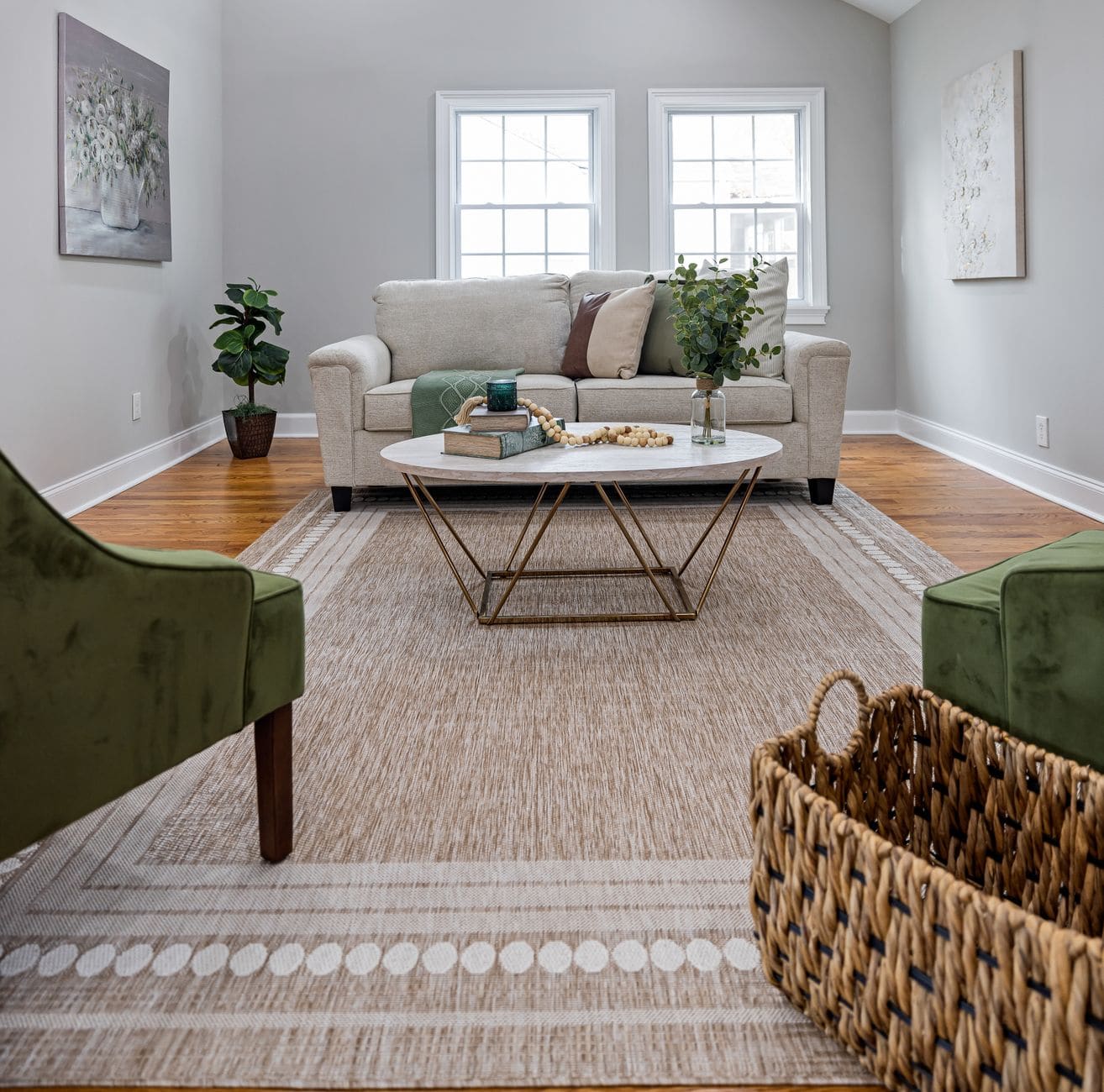
Vacuum the main walking area, or at least the visible rug and the path from the door to the seats. Skip corners and edges unless you have time. If you have pets, a lint roller on the couch and a pass with a handheld vacuum or a damp rubber glove picks up hair fast.
Smell, light, and comfort matter more than perfect surfaces
People remember how a home felt more than what was on a shelf. Three small adjustments help:
- Smell: Take out trash, clean the kitchen drain, and open windows for 10 to 15 minutes before guests arrive if the weather allows. Strong air fresheners and scented sprays can bother guests with asthma or allergies and mask rather than fix odors, so fresh air is the safer choice.
- Lighting: Turn on lamps and warm lights instead of harsh overheads. Soft lighting also hides small flaws.
- Temperature and seating: Set the thermostat to a comfortable range, and make sure there is enough seating and a surface for each person to put a drink.
If you will serve food, wash and put out only the dishes and glasses you need so you are not hunting through cabinets when people arrive.
Containment tactics for the last 30 minutes
If time runs short, contain the mess instead of cleaning it.
- Close doors on rooms guests will not enter.
- The basket trick: Put leftover clutter into a laundry basket and stash it in a bedroom closet.
- Dishes in a pinch: Dirty dishes can go into a closed dishwasher. Do not store them in an oven; someone may turn it on.
- Quick wipe: A damp microfiber cloth in one hand handles fingerprints, crumbs, and splatters in a lap of each room.
- Lighting and trash: If you only do two things, empty every trash can on the path and turn on the lights.
Keep a small tray of supplies ready: an all-purpose spray, glass cleaner, two or three cloths, and a roll of paper towels. For more help deciding what to leave alone, the guide to what to clean first when your house feels overwhelming offers a prioritizing framework.
What to skip entirely
Do not spend guest-prep time on any of these:
- Baseboards, window tracks, ceiling fans, and light fixtures, unless they are visibly bad.
- Inside the oven, cabinets, closets, or drawers.
- Deep carpet or steam cleaning, which needs drying time and rarely changes how a room looks at a glance.
- Rearranging furniture or reorganizing storage.
- Bedrooms that stay closed.
If you do have a free hour, choose the highest-visibility option: smudges on glass doors, the front door and handle, or the entryway floor.
Where this comes from
The safety advice on mixing cleaners comes from the Centers for Disease Control and Prevention’s guidance on household bleach. The rest of this page is common hosting and cleaning practice, not research findings, and the time estimates are rough planning figures. Product labels set the real contact times and safety limits, so follow them, and check them again whenever you change products.